

The Path to Become a Divine Master Missionaries
The Divine Master Missionaries have a number of training centers for future priests and brothers in Africa, South America and Asia. In other areas, a period of initial training and follow-up may take place in one’s own country, where applicants are invited to “come and see” and experience for the first-time what community life is all about. There is a systematic process of formation of the members of the Missionaries of Jesus the Divine Master. The stages start from Aspirancy, Postulancy, Novitiate, Scholasticate/Juniorate and On-Going Formation.
1. Aspirancy
Every vocation starts with a quiet yes. Aspirancy forms that first yes
In Aspirancy, candidates learn to listen to God’s voice and embrace the first movements of a missionary calling.
Aspirancy is the first and foundational stage of formation. In this phase, the Divine Master Missionaries gently introduces candidates to the meaning and spirit of religious life, helping them discern their vocation and prepare for the next stage' Postulancy. For candidates discerning Brotherhood, the Aspirancy period lasts two years, while for those aspiring for priesthood a minimum of one year. During this stage, candidates are evaluated and guided by the Vocations Animator under the leadership of the Secretariat of Vocation and Formation under the perview of the Superior General. Upon showing maturity, commitment, and readiness, they are formally recommended for admission into the Postulancy. The Divine Master Missionaries use several tools to accompany and assess aspirants, including “Come and See” programs, community immersion experiences, and orientation courses, all designed to nurture their spiritual growth and understanding of the Missionary calling.
2. Postulancy
Learning, listening, and living the rhythm of missionary life.
In Postulancy, young men learn to align their gifts with God’s call through prayer, discipline, and guided formation.
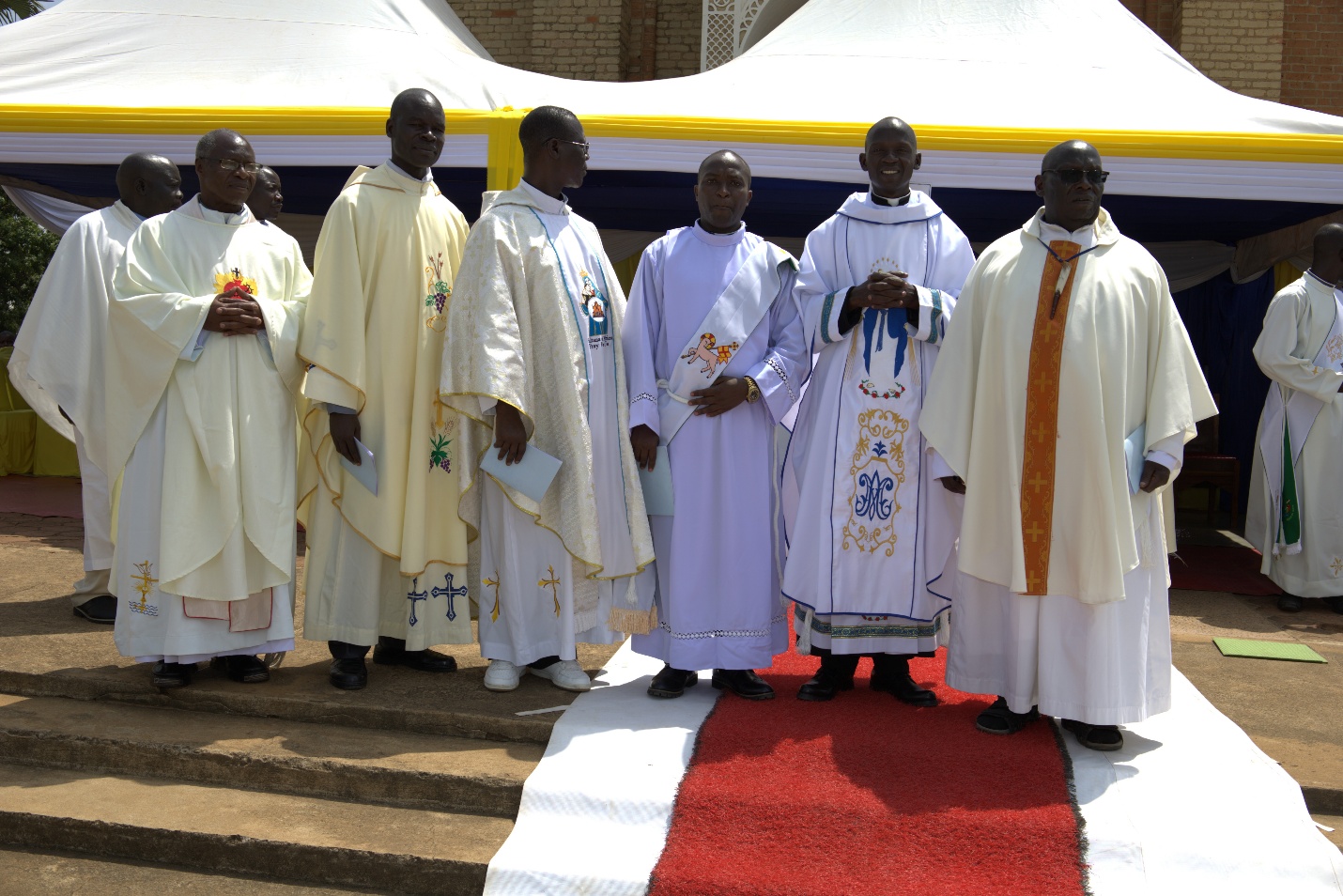
Postulancy is the foundational
stage where a candidate preparing to join the Divine Master Missionaries Missionary deepens
his human and spiritual maturity. During this period, the candidate is
gradually introduced to the discipline, values, and community life of the Divine Master
Missionaries,
preparing him for the more intensive formation of the Novitiate, as stimpulated in the
formation Program Boooklet.
The purpose of Postulancy is to evaluate and nurture a candidate’s vocation, helping him
clarify his desire to commit to religious life. It also provides an opportunity to assess
his readiness, character, and understanding of the missionary calling. This stage typically
includes three years of philosophical studies, complemented by holiday periods spent in our
community
communities, where postulants gain hands-on pastoral experience and grow through community
living.
3. Novitiate
Learning, listening, and living the rhythm of missionary life.
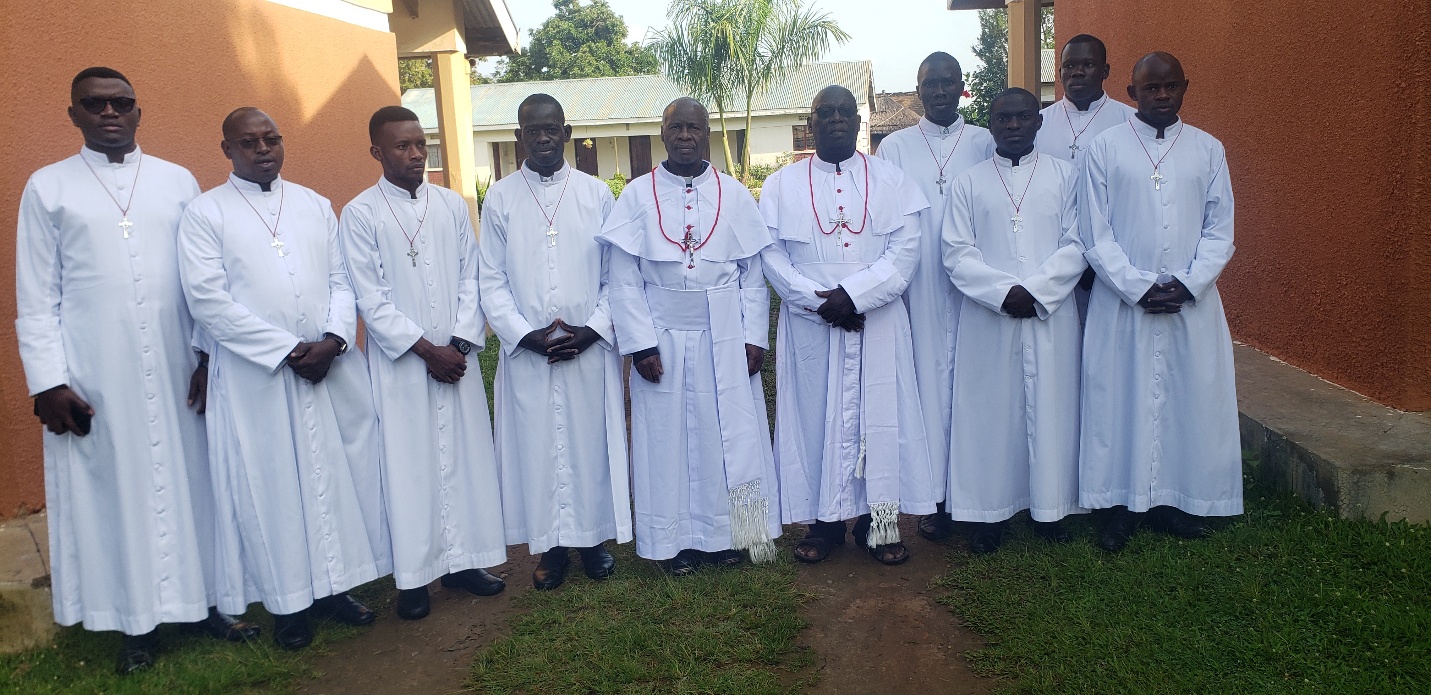
The Novitiate is a sacred season of discovery and discernment, where novices grow in faith, mission, and understanding of their divine vocation. Here, candidates immerse themselves in prayer, Scripture, and pastoral life, guided toward clarity and commitment in their journey of faith.The Novitiate marks the true beginning of religious life, a sacred period of deep prayer, reflection, and immersion into the charism of the Divine Master Missionaries. Its purpose is to help novices grow in a clear understanding of their Divine calling and their vocation within the Vocation. During this stage, they are guided into a life shaped by the Gospel, enriched by Scripture, and strengthened through spiritual and pastoral formation. At the conclusion of this period, the Novice Director carefully evaluates each novice and submits his recommendations to the General Council. The Council then conducts its own assessment to determine the novice’s readiness and suitability for the life of the Divine Master Missionaries. Those who show maturity, commitment, and suitability are admitted to their first profession. Candidates who require further time may undergo a period of probation. Those who are found not suited to the religious life are respectfully advised to take other walks of Life. In this way, the Novitiate ensures that each candidate moves forward with clarity, freedom, and genuine vocational conviction.
4. Juniorate/Scholasticate
Growth, formation, and preparation for effective service.
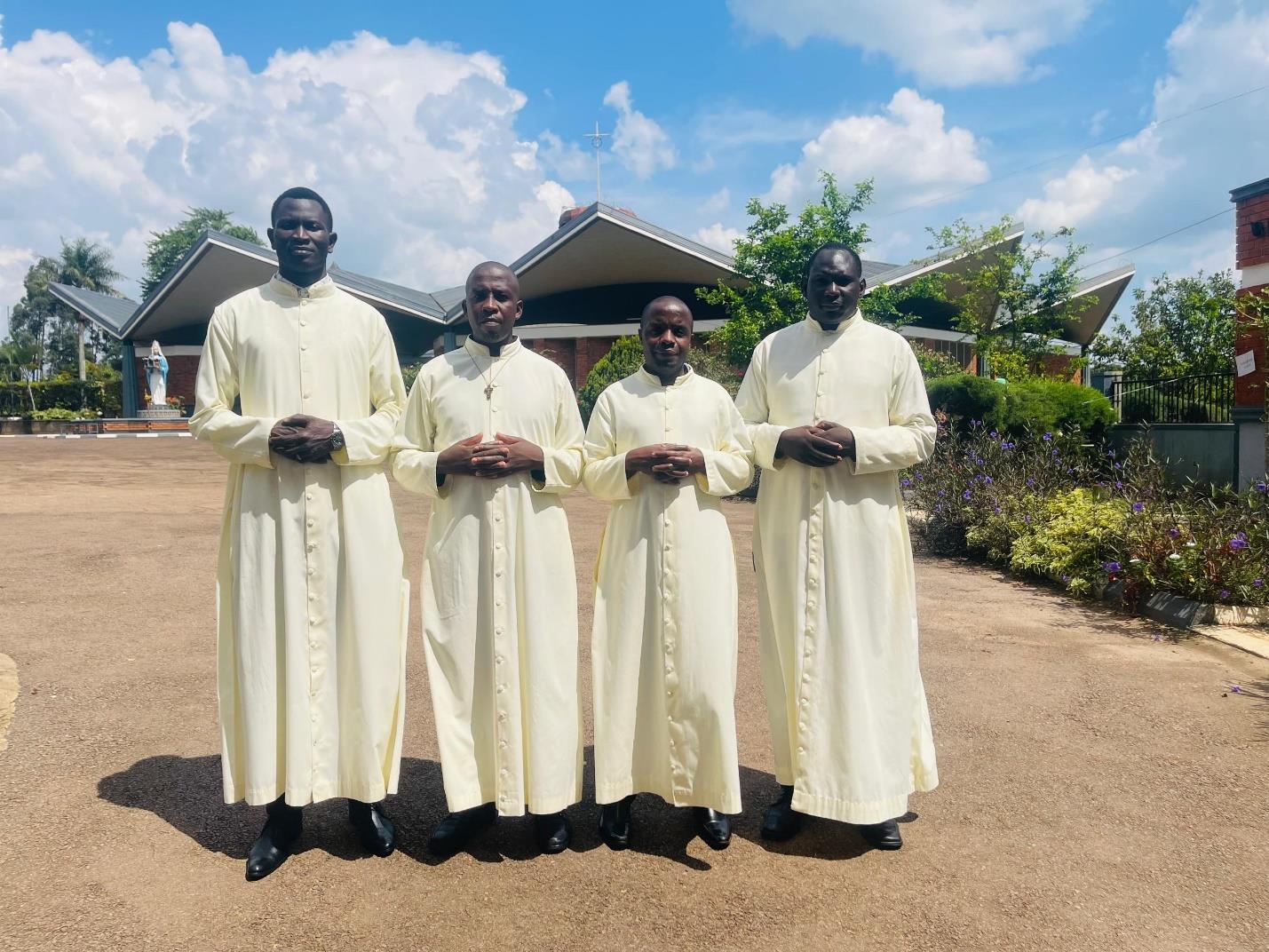
Here, candidates refine their vocation, acquire skills, and prepare to serve God and His people with dedication and love.The Juniorate follows the first profession and spans a period of three years, serving as a time of continued formation and deepening of both spiritual and human maturity. During this stage, the professed are guided to live more fully the life of the Missionaries of Jesus the Divine Master and to embrace their mission with greater effectiveness and commitment. Candidates preparing for Holy Orders proceed to the Theologicum, engaging in advanced theological studies, while professed Brothers undertake programs to enhance their knowledge and skills, either in theology or in professional areas that equip them for their service and ministry. During holiday periods, additional relevant courses and formation experiences are organized to further strengthen their preparation for a life of dedicated mission and pastoral service.
Seminary Life
A Glimpse Into Seminary Life and Growth.
Our Seminarians share their personal encounters, challenges, and growth in their formation.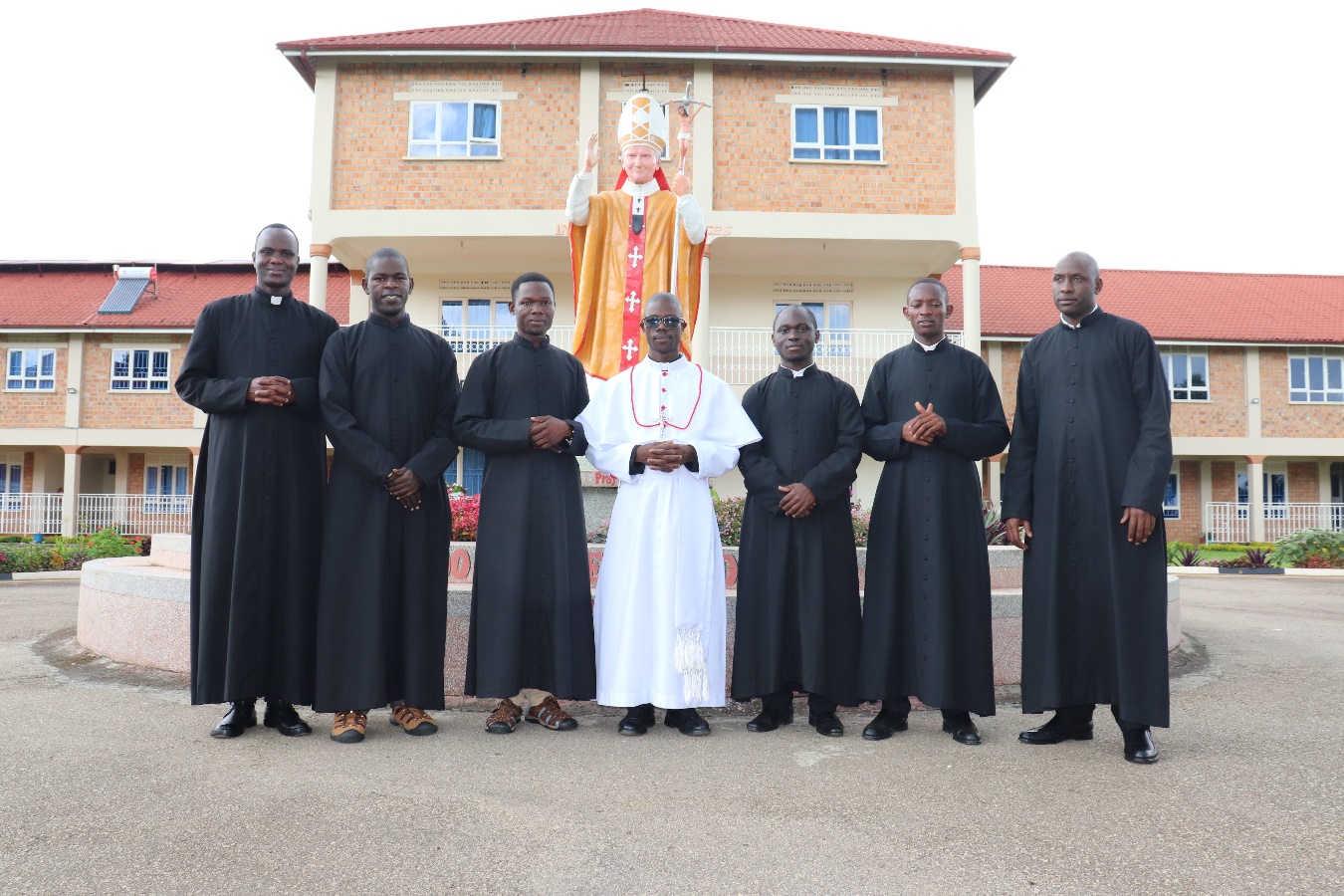
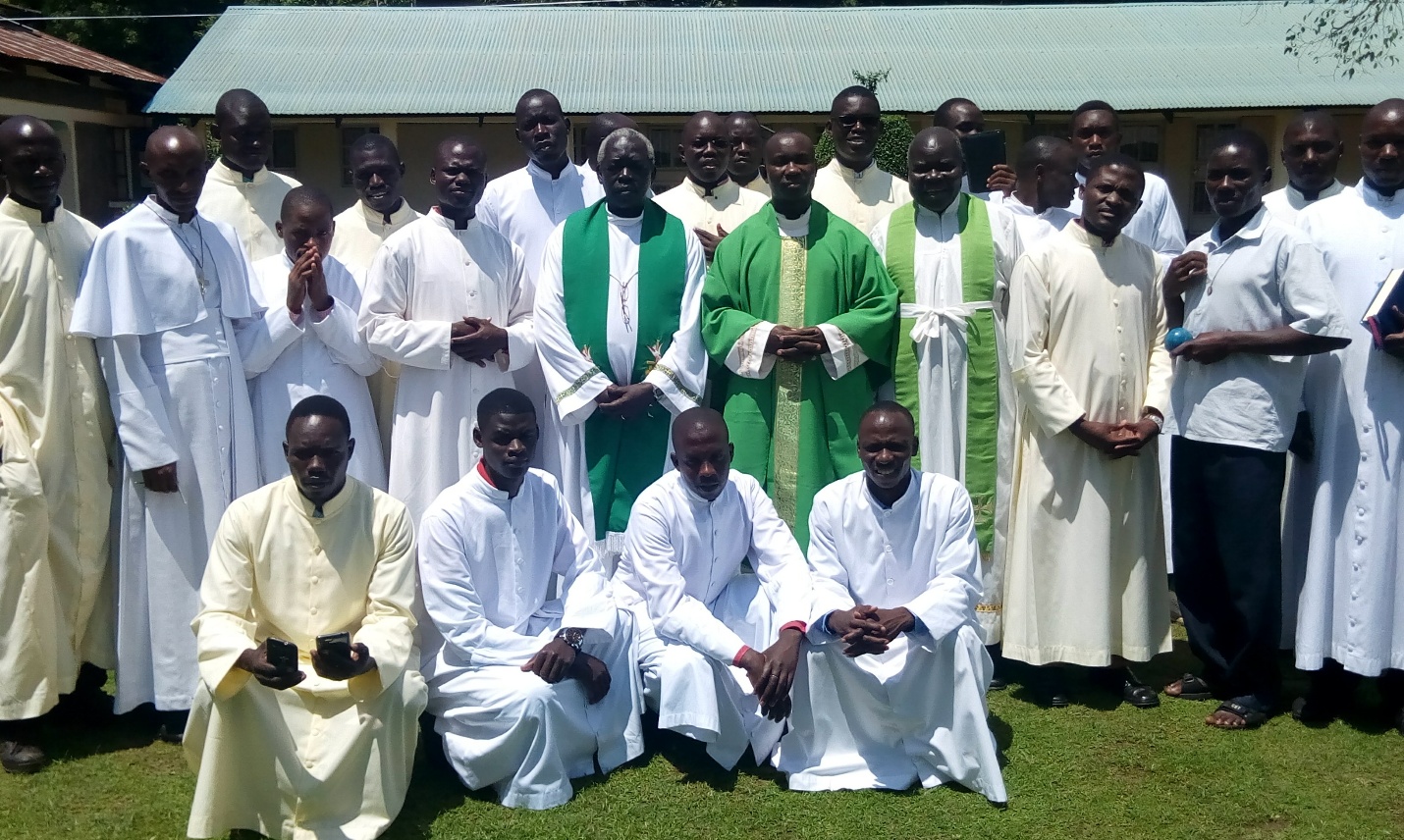
In the photo, from left to right: Rev. Br. Augustine Byarugaba, MIDM; Rev. Br. Tumwesige Taddeo, MIDM; Rev. Br. Thembo Bernard, MIDM; Rev. Br. Dn. Derick Kundu, MIDM; Rev. Br. Alobo Emmanuel, MIDM; Rev. Br. Mwaka Francis, MIDM; and finally, Rev. Br. Dn. Byensi Godwin Peter, MIDM. These are the Brothers currently pursuing their theological studies at St. Paul’s National Major Seminary, Kinyamasika, located in the Diocese of Fort Portal–Uganda, under the governance of the Uganda Episcopal Conference.
Life at the Seminary
Our daily rhythm is shaped by communal prayer, the Eucharistic celebration, academic study, and pastoral engagement. Weekends often involve ministry in nearby parishes, schools, hospitals, and other institutions of higher learning through clubs and movements such as the Legion of Mary, YCS, Catholic Charismatic Renewal, St. Jude Movement, and the Divine Mercy Movement. These apostolates allow us to integrate classroom learning with real-life service. Alongside this rhythm, our formation now embraces a broader suite of core course units, each deliberately connected to the apostolate of the Divine Master Missionaries.
The academic formation we receive in this National Seminary covers a wide range of disciplines rooted in our missionary apostolate. It is rigorous and mission-oriented, preparing us to teach, evangelize, and serve in diverse contexts such as schools, formation houses, media platforms, and community outreach. The disciplines we study shape our identity as educators, spiritual guides, and defenders of the Catholic faith.
Our academic work is guided by a research methodology that is faithful to the Church’s living tradition and responsive to contemporary challenges. Every inquiry begins with Scripture, the Church Fathers, the liturgy, and the Magisterium. We engage historical, literary, philosophical, and social methods always within the unity of Catholic truth and in communion with the Church’s teaching authority. This approach ensures our formation is both intellectually sound and pastorally relevant. It equips us to address modern issues such as social justice, bioethics, and media ethics through a Catholic lens, bringing the light of Christ into every field of apostolate.
In the spirit of the Seminary’s motto, Fiat Voluntas Tua “Let Your Will Be Done” we are continually reminded that the journey to priesthood is not driven by personal desires or ambitions but by surrender to God’s will. The motto calls us to humility, trusting that God knows what is best. Obedience to Superiors and Formators becomes a training of the heart, preparing us for a priestly ministry in which a priest acts not in his own name but in the name of Christ and His Church. It also inspires openness to interior conversion, spiritual maturity, compassion, and self-giving love. Formation is not merely academic; it is a journey of becoming Christ-like. It also prepares us for mission, reminding us that priesthood is not a career but a callone that may lead us to challenging places where we must trust God completely.
This motto finds concrete expression in the expanded curriculum approved by the Dicastery for the Clergy through the Uganda Episcopal Conference. Sound doctrine and sacramental life (Dogmatic Theology, Sacramentology) strengthen us to confront ignorance and indifference. Marian devotion and reverent liturgy (Mariology, Liturgy) bring Christ’s light to every classroom and parish. Spiritual and psychological accompaniment (Spiritual Theology, Psychological Counselling) equip us to support those in despair. Responsible stewardship (Accounting) ensures our ministries reflect Christ’s love through integrity and sustainability. Commitment to justice, moral uprightness, and ecclesial communion (Catholic Social Teaching, Moral Theology, Ecclesiology, Canon Law) empowers us to face societal challenges and build up the Church. Thus, our academic formation becomes a living instrument through which the Cross of Christ brings true victory in our apostolic mission. Inspired by our charism as the Missionaries of Jesus the Divine Master “Following Jesus the Divine Master: the Way, the Truth, the Life, and the Light” (cf. Jn. 14:6; 8:12) we strive in all things to walk in the footsteps of Christ the Teacher, who enlightens minds, transforms hearts, and leads all people to the fullness of life in God.
We engage in pastoral
responsibility of Christian education and the defense of Catholic doctrine. This mission is
carried out in institutions of learning and in public forums where our members serve as
teachers, tutors, professors, chaplains, spiritual directors, and administrators. In each
role, we respond to the needs of the Church and the world with fidelity, clarity, and
compassion.
Our apostolate extends across many platforms and institutions: educational centers from
primary schools to universities; social communication media for digital evangelization;
training centers for lay leaders, catechists, and pastoral agents; houses of religious and
priestly formation; and various forums that promote dialogue, culture, and human
development. We embrace modern approaches and technologies, discerning how best to proclaim
the Gospel and form consciences in today’s rapidly changing world.
As we continue our Spiritual, Academic, Human, and Pastoral formation, we remain grateful to
the Uganda Episcopal Conference for allowing us and especially the Missionaries of Jesus the
Divine Master (MIDM) to receive our academic formation in the national major seminaries. We
are thankful to our superiors, formators, and benefactors who support us in this journey as
we prepare to embrace the mission of Christ Himself. Inspired by the example of those who
have gone before us, we look forward to contributing to the mission of our congregation with
renewed zeal.
We humbly invite you to keep us in your prayers and to support us in every way as we prepare to be sent to enlighten all people in Christ, many of whom are ignorant and are led astray by wrong ideologies, We strive to follow Jesus the Divine Master as our perfect Model in all things.
5. On-Going Formation
In order to cope with the changing world and pastoral demands of the time, the
missionaries constantly receive on-going formation for the betterment of their witness
and service to the Gospel.
The formation aims at the following:
- To give the missionaries “an opportunity of increasing their knowledge of pastoral methods, and theological science, at the same time strengthening their spiritual life and sharing their pastoral experiences with their brother priests” (P.O 19)
- To update their professional, technical and theological training so as to respond effectively to the need of the time, because they are the “way” leading people to God and the “light” to enlightened all in Christ,( Jn. 8: 21,8:12).